
HVAC Insulation
Use HVAC insulation to improve the energy efficiency of your system

HVAC insulation is typically made from glass or stone mineral wool and is suitable for heating, ventilation and air conditioning applications in commercial and other non-domestic buildings. HVAC insulation benefits at a glance:
- Thermal insulation
- Can be part of a passive fire protection design
- Can helps to protect against condensation damage
The benefits of HVAC insulation
Whether it’s used in hotels, hospitals, airports, warehouses or schools , HVAC insulation can help to ensure systems run. Let’s look at the core elements.
Insulating ducts can reduce the amount of heat (or cold) energy needed to maintain the air temperature as designed, reducing the possible energy losses and ensure the correct temperature is delivered.
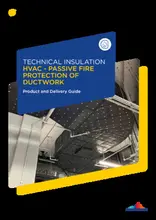
By using fire-rated insulation systems that are tested to provide passive fire protection such as the Isover U Protect System, buildings can be designed to reduce fire risk of living and working environments.
Ensuring the correct specification of pipework insulation can impact the running costs by reducing any heat loss and minimising inefficiencies in hot flow situations.
Mineral wool insulation can help prevent the surfaces of pipes or ducts from falling below the dew point and forming condensation. This reduces the risk of moisture-based corrosion or damage to systems and wider structures.
Isover’s HVAC insulation solutions can contribute to multiple credit categories in LEED, BREEAM and WELL in relation to energy, materials, resources, health and wellbeing, indoor environmental quality, and innovation.
Learn more about HVAC insulation
Get to know HVAC mineral wool insulation better with these articles written by our development teams and insulation specialists.
Explore how HVAC insulation helps cuts energy loss and maintains system temperatures
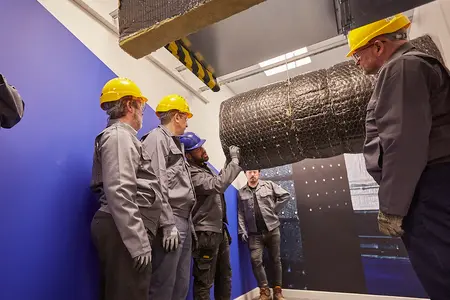
Find out how Isover delivers in-depth training and CPD to support professional development
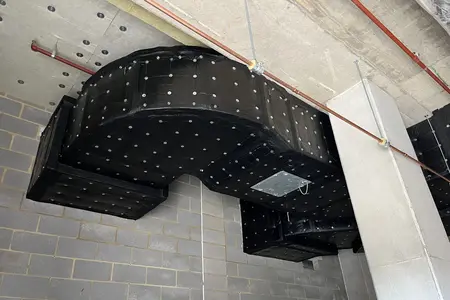
Isover HVAC insulation products
With many different building characteristics and uses, Isover HVAC products are designed to help improve thermal comfort, as well as fire-rated protection. Explore our range of HVAC solutions here:
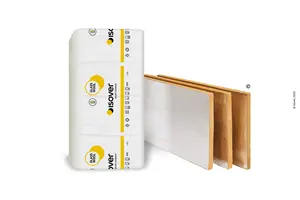
Isover Climcover Slab Alu2
HVAC - Thermal insulation for rectangular metal ductwork.
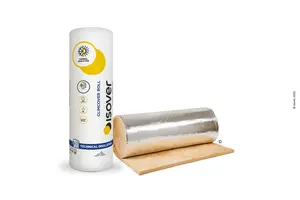
Isover Climcover Roll Alu2
HVAC - Thermal insulation for circular metal ductwork
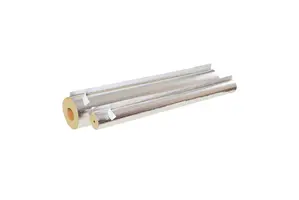
Isover Climpipe Section Alu2
HVAC - Thermal Insulation suitable for Pipework
Isover ULTIMATE™ Protect HVAC insulation
The Isover U Protect System made from mineral wool offers a lighter weight solution compared to traditional stone wool options. U Protect Slabs and Wired Mats have a typical density of 40 kg/m3 compared to between 60 kg/m3 and 100 kg/m3 for stone wool. This makes the system easier to handle as well as reducing the stress on supporting structures.
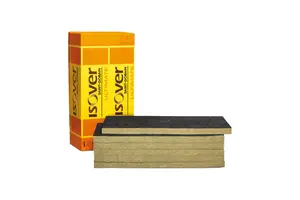
Isover U Protect Slab 4.0 Alu1
Isover Ultimate™ mineral wool slabs for fire protection of rectangular ductwork.
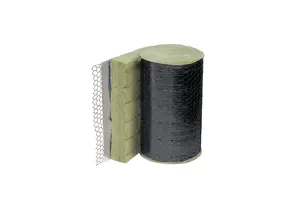
Isover U Protect Wired Mat 4.0 Alu1
Isover Ultimate™ mineral wool wired mats for fire protection of circular ductwork.
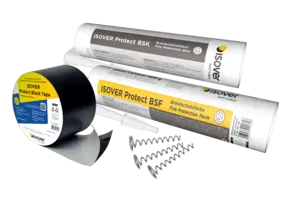
Isover U Protect Accessories
Accessories to be installed with the U Protect System for passive fire protection of ductwork.
Frequently Asked Questions
I have severe allergies, and my contractor is installing Isover. What’s in the product?
We are unable to provide specific case advice – however, please refer to our Safe Use Instruction Sheet (SUIS), a link to which you’ll find below. Our product contains less than 1% mineral oil, which is added to reduce dusting of the glass mineral wool.
For more details, please read are SUIS Sheet here
Does your insulation contain palm oil?
No. Isover insulation does not contain palm oil.
Is Isover packaging recyclable?
Yes. In 2025, we also reduced the ink coverage in our white packaging to less than 15%. This reduction means our packaging can now be used to produce a wider variety of items made of recycled content than previously. This is because using a higher proportion of white plastic makes it more versatile. Our packaging also contains 30% Post Consumer Recycled content, which means less raw virgin materials go into our packaging and further strengthens our commitment to sustainability.
Do you recycle leftover insulation?
Isover doesn’t currently offer a customer recycling service. If you do need to dispose of leftover insulation, residues or by-products, this should comply with the requirements of environmental and waste disposal legislation and any local authority rules.