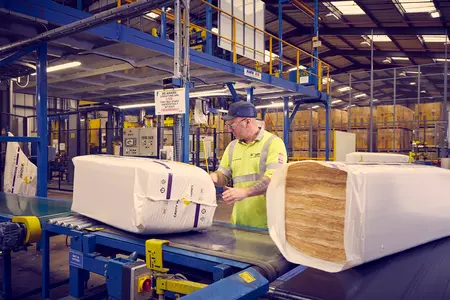
Insulate your suspended timber floor for thermal efficiency or improved acoustic insulation
Typically, suspended floors are constructed using solid timber joists or timber I-beams, with a thick timber deck laid above the joists. A key challenge with this approach is the noise and heat transfer between the two rooms. By using mineral wool, you can improve acoustic or thermal floor insulation.
Take a closer look at the benefits of suspended floor insulation
There are lots of advantages to insulating your suspended floor, let’s look at some of them here:
Thermal insulation
The small pockets within the mineral wool structure trap air, which is a poor conductor of heat, and significantly reduces heat transfer, making mineral wool an effective thermal insulator. Used as part a system to provide thermal insulation, mineral wool can help to improve thermal efficiency and reduce overall energy costs.
Acoustic performance
The non-continuous structure of the glass fibres that make up glass mineral wool impede the passage of sound. This can be used in systems to reduce airborne sound transmission and improve acoustic insulation when installed in accordance with the manufacturer’s system installation guidance. For our system information, please refer to the British Gypsum White Book specification selector.
Reaction to fire
A significant number of our Isover glass mineral wool products achieve Class A1 reaction to fire to BS EN 13501-1, this is the highest level of performance. Please check Declaration of Performance for individual product’s reaction to fire classification.
Suspended floor insulation products
Glass mineral wool is ideal to help increase the acoustic and thermal performance of suspended floors.
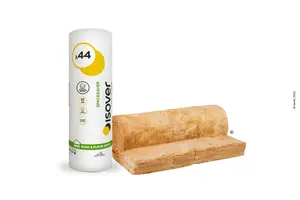
Isover Spacesaver
Thermal insulation for pitched roof joist applications
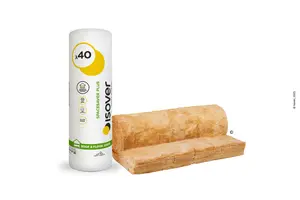
Isover Spacesaver Plus
Thermal insulation for pitched roof joist applications
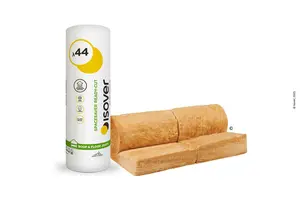
Isover Spacesaver Ready-Cut
Thermal insulation for pitched roof joist applications.
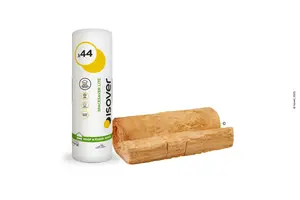
Isover Spacesaver Lite
Thermal insulation for pitched roof joist applications
Learn more about suspended floor insulation
Get to know suspended floor insulation better with these articles written by our development teams and insulation specialists.
Uncover how mineral wool insulation cuts heat loss, energy costs and supports safety
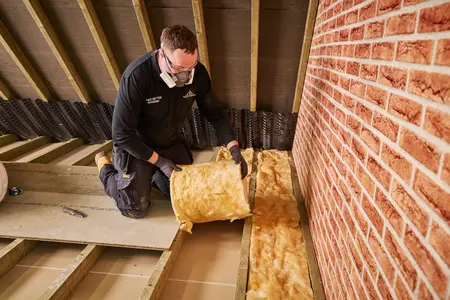
Discover how a fabric-first approach cuts building energy using insulation
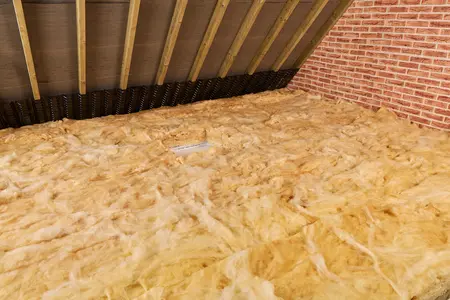
Learn how acoustic insulation helps reduce sound in homes, creating comfortable environments